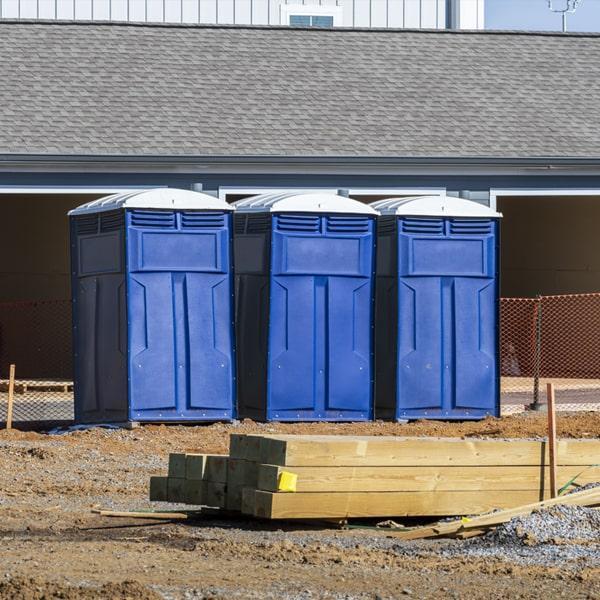
Federal construction toilet ratios
OSHA 29 CFR 1926.51(c) requires toilets at construction jobsites according to workforce size. Table D-1 provides the baseline below.
| Number of employees | Minimum under Table D-1 |
|---|---|
| 20 or fewer | 1 toilet |
| 20 or more | 1 toilet seat and 1 urinal per 40 workers |
| 200 or more | 1 toilet seat and 1 urinal per 50 workers |
Availability and sanitary condition matter
Providing the numerical minimum is only part of the responsibility. OSHA describes sanitary and immediately available facilities as protection against adverse health effects. Units should remain usable, stocked and reachable without unreasonable delay.
How to plan beyond the minimum
Multiple floors, widely separated work zones, long walking distances, overlapping shifts, hot weather and high usage can justify more units or more frequent service. Plan around peak headcount and review the setup as project phases change.
Placement and service access
Place units on firm, level ground outside equipment swing areas, falling-object zones, fire lanes and required access paths. Maintain a clear pump-truck route during the entire rental. If fencing, materials or parking block service, sanitation conditions can deteriorate quickly.
Official OSHA references
This page provides general planning information and is not legal or regulatory advice. Employers should consult current official requirements and qualified professionals when necessary.
Frequently asked OSHA questions
Does one toilet for every 20 workers apply to every site?
No. It is the federal construction baseline for 20 or fewer workers. Larger construction crews follow Table D-1, while general industry, agriculture, maritime work, California rules and specific contracts can involve different requirements.
Do portable toilets have to remain clean?
OSHA’s sanitation standards are intended to ensure sanitary facilities are available. A rental quantity that technically meets a table can still be inadequate if units become unusable or inaccessible.
Can employees be prevented from using the restroom?
OSHA guidance says employers must provide prompt access to toilet facilities when needed. Employers should review the current standard and official interpretations for their specific circumstances.
Who is responsible for compliance?
The employer or site operator is responsible for determining and meeting applicable requirements. Rental guidance does not replace legal, regulatory, permit or safety advice.